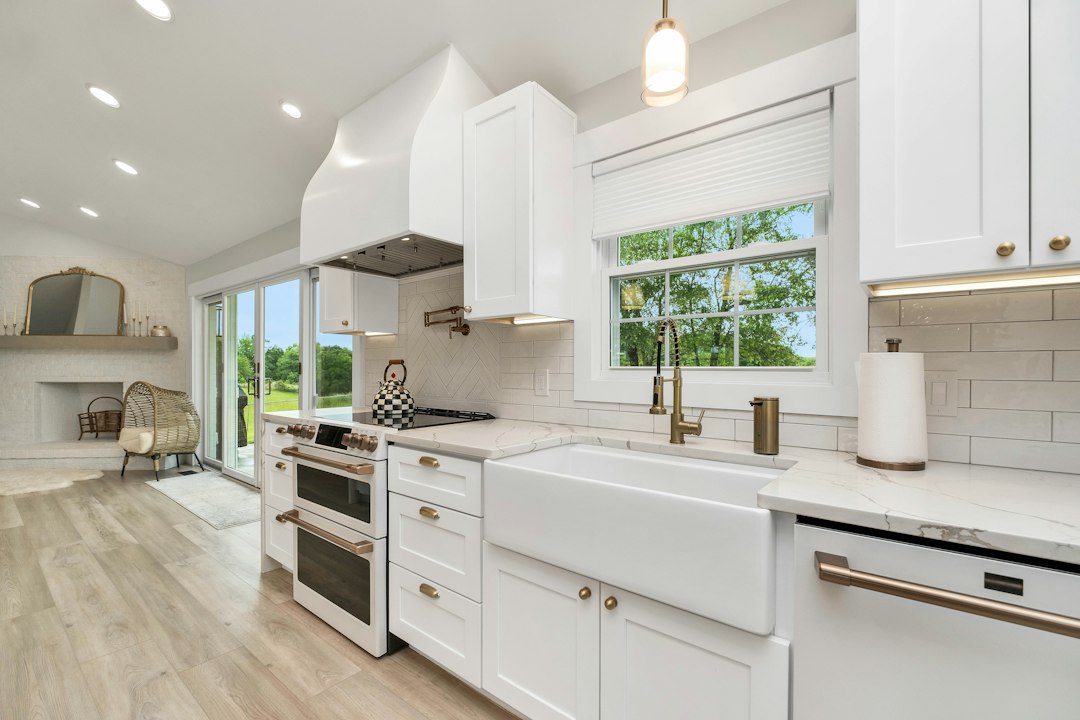
A ducted range hood is the single biggest air quality upgrade in most kitchen remodels, and it is a better place to start than the cabinet color. A kitchen is the room where combustion, steam, grease, cleaning products, water and food all meet, so a remodel is a rare chance to fix the things you breathe, drink and touch every day.
Most remodel advice stops at style. The notes below treat the kitchen as an indoor environment: what the air carries, what the materials release, where water hides, and what happens when the ground moves. Each choice is easiest to make while the walls are open.
When you plan kitchen remodeling throughout irvine, it helps to start from the house you actually have. Much of the city grew as master planned villages from the 1970s onward, so many homes share similar layouts, slab foundations and original plumbing routes. Ask a contractor who knows these floor plans what is easy to move and what is not before you commit to a layout.
Start With the Air
Duct the hood outdoors
Recirculating hoods catch some grease and odor, but moisture, combustion gases and fine particles stay in the room. A hood that vents outside removes them. Do not assume a recirculating unit cleans the air as well as a ducted one.
Size the hood to the cooktop
Capture depends on size, height and placement, not just a big airflow number. Choose a hood at least as wide as the cooking surface and mount it at the height the manufacturer specifies. A powerful but narrow or high unit often captures less than a well matched one. Cook with the back burners when you can, since capture is better there.
Check for backdrafting
A high airflow hood in a tight house can pull air backward through a gas water heater or furnace flue. In many Irvine homes the water heater sits in the garage or a closet near the kitchen. Ask whether makeup air is needed, and have the system tested for backdrafting after installation.
Consider induction
If you are replacing a gas range, induction removes indoor combustion byproducts entirely, heats quickly, and leaves a cooler kitchen during hot inland summers. Magnetic cookware such as cast iron and many stainless pieces works fine, so you do not need to replace every pan. Have an electrician run a load calculation first, because an older panel may need an upgrade or a dedicated circuit.
Know What Is Behind the Old Surfaces
Test before you demolish
Homes built before the late 1970s can contain lead paint, and asbestos can turn up in old sheet vinyl, flooring mastic, joint compound and textured ceilings. Several of Irvine's earliest villages fall in that era, so newer-looking neighborhoods are not a safe assumption. Test suspect materials before sanding, scraping or tearing anything out.
Look for termites and rot
Drywood termites are common in Southern California and often hide in wood behind and under cabinets. When the cabinets come out, look for small, hard, sand-like pellets and wood that sounds hollow, and treat before new boxes go in.
Slow leaks from old supply lines and drains also rot the cabinet floor and the wall behind the sink, and they grow mold out of sight. Replace damaged material instead of covering it, and use moisture resistant board behind the sink run.
Choose Materials That Release Less
Cabinet boxes and finishes
Many cabinet boxes are particleboard or MDF bonded with resins that can release formaldehyde. Ask for no added formaldehyde or low emission panels, seal exposed raw edges, and ventilate well for the first weeks after install, when off-gassing is highest.
Use low VOC paints, sealers and adhesives, but remember that a low VOC label does not mean zero emissions. Let finishes cure fully before dishes and food go back into the cabinets. Dry to the touch is not the same as cured.
Engineered stone and dust
Cutting and grinding quartz and other engineered stone releases crystalline silica dust, which causes serious lung disease in fabricators. Ask that cutouts and edge work be done at the shop with water suppression, not dry cut in your driveway or kitchen. Quartz is also not maintenance free or fully heat proof, so hot pans belong on a trivet.
Natural stone
Granite and marble vary widely in porosity. Try the water drop test: if water darkens the stone within a few minutes, it is time to reseal. Sealing is a schedule, not a one-time event, and marble etches from citrus and vinegar whether sealed or not.
Keep Water Clean and Contained
Hard water and the fixtures it clogs
Southern California tap water tends to be hard, which builds scale on faucet aerators, dishwasher spray arms, ice makers and kettle elements. Choose faucets with removable or easy-clean aerators, and consider a point of use filter or whole house treatment while the plumbing is open.
Replace what you can reach
Swap old braided or plastic supply lines and stiff multi-turn valves for new quarter-turn shutoffs. If you find gray plastic polybutylene pipe, common in homes from roughly the late 1970s to the mid 1990s, discuss replacing it.
Add a drip tray or leak sensor under the sink, and at the dishwasher and fridge water line. Confirm the dishwasher drain has a high loop or air gap so dirty water cannot siphon back.
Think twice about moving the sink
On a slab foundation, a new drain location means cutting and trenching concrete, and an island sink needs a workable venting method. Keeping the sink near its existing drain is usually the easiest and least disruptive choice.
Build for the Climate and the Fault Lines
Earthquakes
Irvine sits in an active seismic region. Install anti-tip brackets on ranges, anchor tall pantry cabinets and shelving to studs, and use positive latches on upper cabinets so dishes and glass stay put during shaking.
Dry Santa Ana winds
Very low humidity episodes shrink solid wood. Let butcher block, solid wood doors and wood flooring acclimate inside the house before install, and oil wood counters regularly so they do not check or crack.
Flexible joints
Seal the joint between countertop and backsplash, and at inside corners, with a flexible sealant rather than grout. Grout cracks there as the house moves slightly with temperature, humidity and minor ground movement.
Light, Heat and Daily Habits
Layered lighting
Combine ambient light, under-cabinet task light and accent light, with task lights on separate switches or dimmers. Choose high color rendering LEDs so food looks true while you prep it.
Manage west sun
West-facing kitchen windows bring harsh late afternoon sun in inland Orange County summers. Low emissivity glass, exterior shading or adjustable window coverings keep the room comfortable without extra air conditioning.
Save water, sort waste
A full modern dishwasher generally uses less water than washing the same load by hand. Pair it with an efficient faucet that has a pause feature or pull-down spray, so you rinse only what you need.
Plan pull-out bins for trash, recycling and food scraps near the prep zone. Easy sorting is far more likely to become a daily habit, and it keeps food waste out of open cans that attract pests.
The Order That Works
Settle ventilation and the electrical load first, because they decide the hood, the cooktop and sometimes the panel. Test and inspect during demolition, then close the walls with dry, sound material. Choose low emission cabinets and finishes, schedule stone work off site, and leave time for everything to cure before the kitchen goes back into daily use. Done in that sequence, a remodel in Irvine ends with a room that is easier on the lungs, the pipes and the people using it.